
What does it mean to teach in times of transition?

The way teaching is done today is changing — and teachers often sense this before they can articulate it. Their practices now meet wider social and ecological contexts. Questions become more significant. Even when the work itself remains deeply meaningful, responsibility can feel heavier.

Many teachers work with care and integrity, yet often in isolation. Not because others are absent, but because there are few shared spaces where this work can be seen and placed within a wider field.

Our website eco-awareness.earth offers a way to place your work within a living field — without self-promotion, performance, or pressure.

Put your Dot on the Global Map of Eco-Awareness.
No fees. No obligations.

Perhaps you, as teacher and facilitator, sense too that something fundamental has shifted. What once felt sufficient — clear methods, well-established spaces and reliable formats — no longer fully meets the moment.

Not because the practice has failed. But because the world has changed.

Teachers today navigate multiple tensions at once:

  • • Teaching depth in times of urgency
  • • Holding space without clear maps
  • • Staying grounded while the wider field feels fragmented
  • • Feeling responsible, while often working alone

There is commitment, integrity, and care — yet often no shared place where this work can truly land.

What if this moment is not asking for better techniques, but for new ways of being visible, connected, and in relationship?

What if teaching today is less about transmissionand more about participation in a living field?

Welcome to the Eco-Awareness • Reconnection • Transformation • Hub (EARTH).

Five Orienting Perspectives for Teaching in Times of Transition

Many teachers work with care and integrity, yet often in isolation. Not because others are absent, but because there are few shared spaces where this work can be seen and placed within a wider field.

This hub offers a way to place your work within a living field — without self-promotion, performance, or pressure.

1.

Teaching has become relational, not individual.

The impact of teaching today depends less on isolated excellence and more on context, connection, and resonance.

2.

Visibility is no longer about promotion.

Being findable is not the same as marketing yourself. It is about placement, not performance.

3.

Fields grow through recognition, not control.

What is acknowledged and related begins to organize itself organically.

4.

Isolation weakens even good work.

Quality needs relationship in order to become sustainable and resilient.

5.

The role of the teacher is evolving.

From expert to participant.
From authority to contributor.
From holding answers to listening to what wants to emerge.

Knowing this is one thing. Living and embodying it is another.

Many teachers sense this shift, but lack a shared, trustworthy space where their work can be:

• seen without being reduced
• connected without being categorized
• placed within a wider context of meaning

This is where the field itself becomes a form of support.

Put your Dot on the Global Map of Eco-Awareness.
No fees. No obligations.

Why Teachers, Educators and Facilitators join the Field of Eco-Awareness

Visibility with Integrity


Let your work be found in the right context. Without self-promotion, performance, or pressure.
Visibility here is about placement, not marketing.

Belonging instead of Isolation

Become part of a wider field of teachers, facilitators, and initiatives working at the intersection of awareness and responsibility.

Not as a network to manage, but as a shared landscape.

Clarity through Context

See your work in relation to other practices, perspectives, and approaches.
Context creates orientation — for you and for those who are looking

Voices from the Field

Teacher & Facilitator
“I hesitated at first. I didn’t want another platform to manage or promote myself on. What changed my mind was the feeling that this isn’t about visibility , it’s about placement. My work finally feels situated, not floating.”
Meditation Teacher
Meditation Teacher
“Most of my work happens quietly, in small groups. I rarely see where it belongs in the bigger picture. Being part of this field gives me a sense of belonging without asking me to become louder or different.”
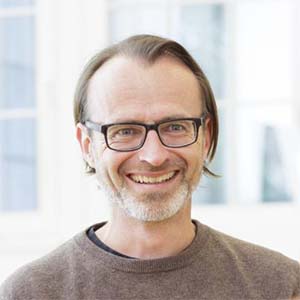
Educator & Facilitator
“Teaching today feels different than it did a few years ago. The questions are bigger, the context more complex. What I appreciate here is not answers, but orientation and the feeling that I’m not holding this alone.”
eco-awareness.earth Explore the Field Choose 2 or 3 areas that spark something in you — from anywhere in the Field. Then see what might become possible when they connect.
Select 2 or 3 areas to begin
Your selection
What becomes possible when we connect the dots?
Place your Dot

How it works

1.

Place your work in the field

Choose where your are active — geographically and thematically — so others can orient themselves.

2.

Describe your practice or work in clear, accessible language

Share what you do. Share what you stand for. Share how people can engage. There is no need for marketing language or self-promotion.

3.

Claim, verify, and connect your presence

Confirm ownership of your listing and become part of a growing, shared map of Eco-Awareness.

No algorithms. No rankings.
No performance pressure.

Joining and creating a listing does not require any payment.

Here is what you get

  • Personal listing or 
listing of your project
  • Self-written description for practice and format visibility
  • Thematic connections and contextual discovery
  • Placement within the global Eco-Awareness field
  • Long-term presence beyond feeds or trends

The Space between the Dots

Crafted with 💚 in Frankfurt, hosted in Europe, made for Earth.

© 2026 All Rights Reserved.